Technology and the future
Making what we imagine real, while protecting privacy and creating more connection.
 COACHELLA
I like figuring out how complicated things work. That usually means healthcare or technology, but it can just as easily send me into weather patterns, architecture, or whatever else has my attention that week. I also love K-pop, EDM, clean visuals, and anything that feels like it was done with care.
This site is where I keep some of that: things I like, things I'm making, and thoughts I haven't finished yet. I wanted something closer to an old personal homepage than a portfolio. I could picture it long before I knew how to build it. Now I can.
Making what we imagine real, while protecting privacy and creating more connection.
Huge interconnected systems and understanding how the pieces influence one another.
Relief and joy. More connection. More freedom to make what we imagine real.
Read the thought ↗The places, music, stories, and principles I come back to.
5 / 8 COLLECTED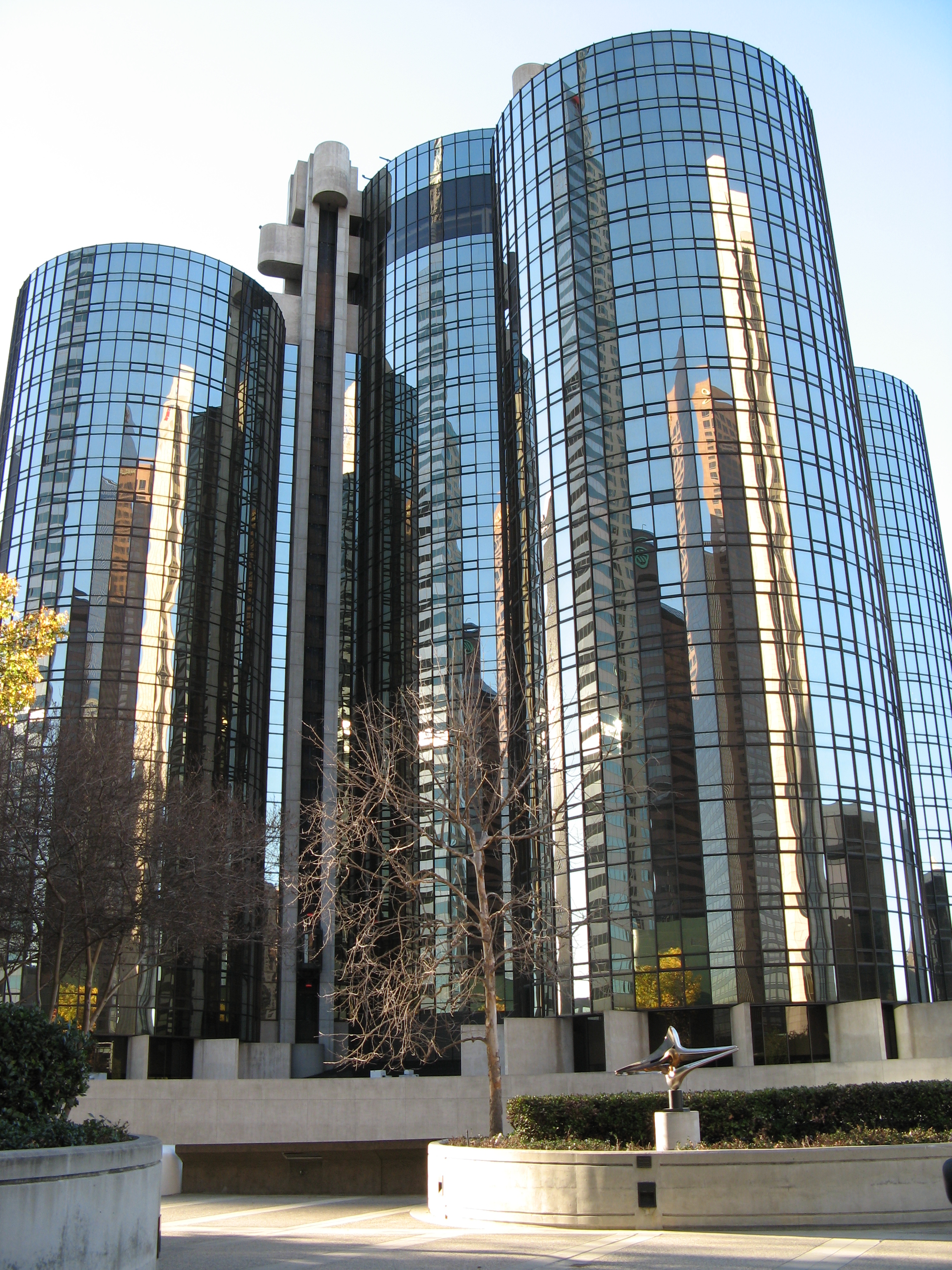
It has this techno-future optimism to it. Beautiful architecture, and a place I love going to. We deserve to be happy about the future.
Geographer · CC BY 2.5. Optimized for the web; cropped in this view.

Unreal. Perfect synchronicity. Looked angelic.
@aanglerrr · CC BY 4.0. Optimized for the web.
A journey and what we discover about ourselves as we take it. I love the reimaginings, with no single version in particular. They leave me thinking about being decent to each other and the world we leave behind when we surrender that.
I try to start with what I could have done differently instead of looking for someone to blame. That doesn't mean everything is mine to fix. The hard part is knowing when to act, when to ask for help, and when a constraint is actually real.
An era of EDM with beautiful vocals and fun, dancey vibes.
A few things I've built, for work and for myself.
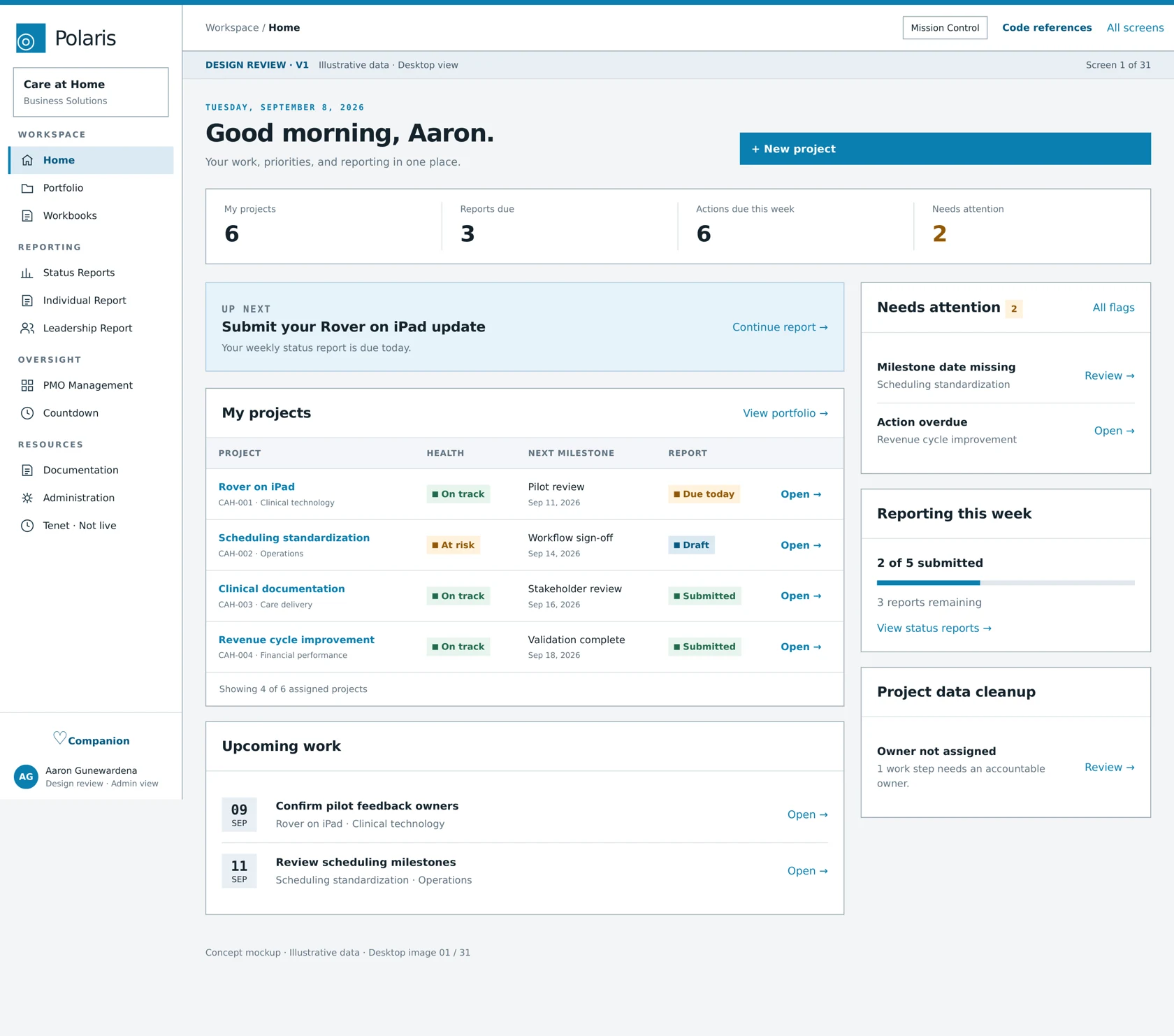
I built Polaris because our projects were spread across too many files, meetings, and individual ways of working. It puts the portfolio, project plans, risks, milestones, and reporting in one place.
The software is only half of it. Polaris also reflects how I want the team to run the work: keep commitments visible, raise problems early, and make sure decisions don't disappear after a meeting.
Professional context ↗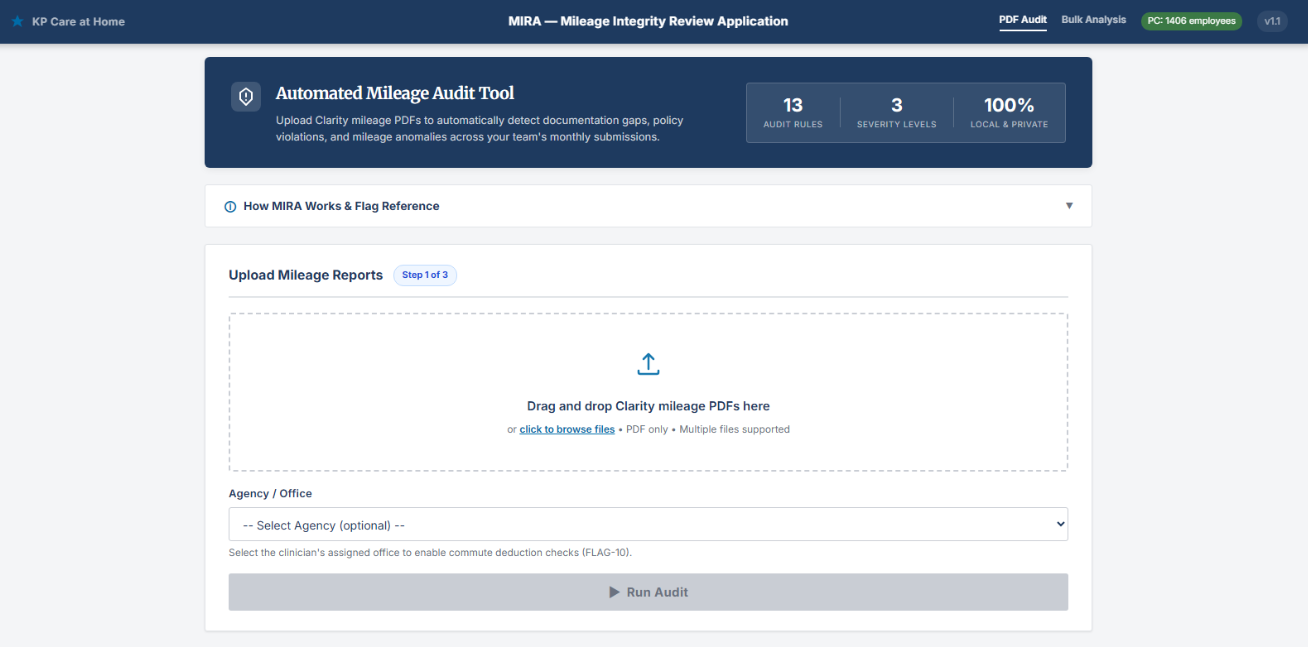
I built MIRA to turn raw mileage activity into something managers could actually review. It combines activity exports with position data, flags patterns and outliers, and generates reports for agencies and supervisors.
The hard part wasn't just finding unusual activity. It was making the process repeatable, separating signal from noise, and packaging the results so the right people could act without rebuilding the analysis by hand.
Professional context ↗I made this so our teams could quickly see whether a connection problem might be part of a wider carrier issue in Southern California or Hawaii.
It uses changes in network traffic as a clue. It can't test someone's connection directly, but it gives them a better place to start.
Open Network Checker ↗This site is for the parts of me that don't fit neatly into a résumé: music, places, passing interests, half-formed thoughts, and whatever I make next.
I wanted it to feel like an old personal homepage viewed through a slightly overbuilt computer terminal. That felt more honest than another polished portfolio.
Why I built it ↗I wanted a place to express myself and collect what matters to me. This website is one of the things I could imagine but didn't have the capability to build on my own. Being able to speak to technology helped me build it.
Read note ↗We deserve to be happy about the future. We deserve a future that brings us relief and joy, rather than being used to enslave us and bog us down. The future should enable connection, not isolation.
Read note ↗The democratization of technology gives me hope. You can think of a beautiful future and have a tool that enables you to drive toward it. More people can make worlds that belong in their heads outside of their heads.
Read note ↗